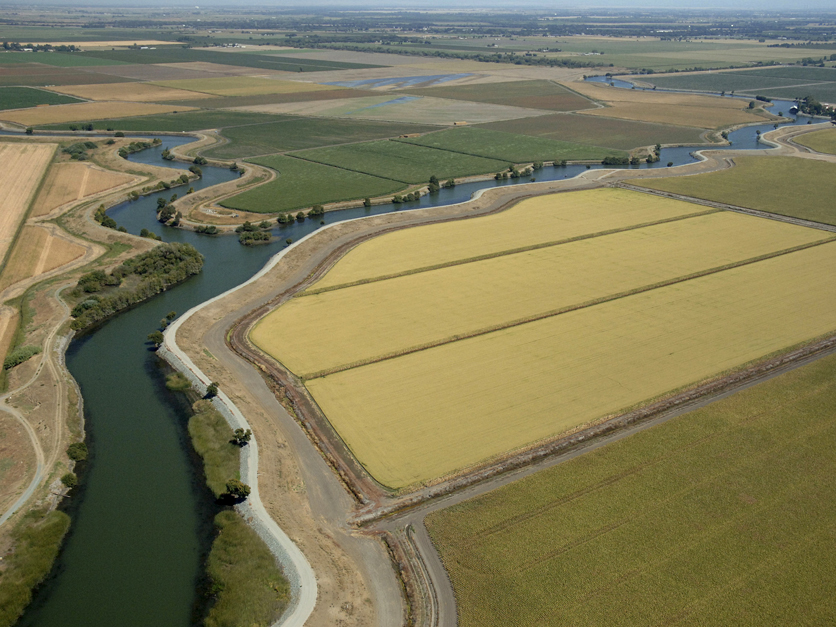
When we talk about losing farmland, the conversation often centers on subdivisions, warehouses and expanding cities. A new draft report from the Delta Protection Commission examines another source of pressure on agriculture: the conversion of working farmland for habitat restoration, flood control and water infrastructure.
For San Joaquin County farmers, the report raises a question with consequences well beyond an individual property line. How can California meet its environmental and water management goals while keeping Delta agriculture economically viable?
“We have to defend every one of our agriculture resources,” Assemblymember Rhodesia Ransom, D-Tracy, told The Center Square in a November 6 article about the draft. Ransom emphasized that reducing the acreage available to farmers while their costs continue to increase puts agricultural livelihoods under greater pressure.
The September 2026 public review draft, Farmland Conversion in the Delta: Protecting Agriculture as Part of the Coequal Goals, estimates that approximately 17,000 acres of farmland are being converted or are proposed for conversion through habitat restoration and flood control projects completed, underway or in planning since 2013. That represents roughly 4 percent of the Delta’s mapped agricultural acreage. The figure includes planned projects; it does not mean all 17,000 acres have already left production.
Agriculture still occupies approximately 416,709 acres, or 56 percent of the legal Delta’s total area, according to the report’s analysis of 2023 land-use data. The draft also notes that more than 80 percent of Delta farmland is classified as Prime Farmland. Conversion is affecting productive agricultural ground, including land that supports the region’s farm economy and rural communities.
The concern is broader than the loss of a single field. A shrinking agricultural land base can weaken the network of businesses, jobs and infrastructure that supports remaining farms. The report warns that those cumulative effects can threaten the long-term viability of agriculture and the rural communities built around it.
The report identifies a gap between California’s stated commitment to Delta agriculture and the protections provided in practice. The state’s coequal goals address water supply reliability and ecosystem protection and restoration, with a requirement to protect and enhance the Delta’s agricultural and other values. Yet the draft finds that many agricultural protections rely on recommendations or flexible language rather than clear, enforceable standards.
The Commission points to a limitation in its own authority. Its land-use oversight applies to projects in the Delta’s Primary Zone that require local government approval, but it does not extend to projects undertaken by state agencies. Because the state plays a major role in restoration, that distinction leaves an important gap in how agricultural protections are applied.
“We need a more effective strategy for supporting and protecting Delta farmland,” Sen. Jerry McNerney, D-Stockton, told The Center Square. McNerney supported the draft’s basic findings and emphasized agriculture’s importance to the regional economy, environment and flood protection.
That gap matters because the effects of conversion can reach neighboring farms. The report calls for closer examination of seepage, drainage, pest pressures, access and other impacts that can make remaining farmland more difficult or expensive to operate. It also emphasizes that farmers and reclamation districts need meaningful involvement early in project planning, followed by ongoing communication and accountability.
Levee and drainage funding is a particularly important concern. The draft reports that conversion can reduce reclamation district assessment revenues, potentially shifting costs onto remaining farmers and landowners. Those systems serve the broader Delta as well as individual farms. Projects intended to provide statewide benefits should account for their long-term effects on the local agencies and landowners maintaining that infrastructure.
The draft identifies the Lookout Slough restoration project as a positive example. Participants in the Commission’s outreach credited the state with addressing impacts to farms in good faith and committing to pay reclamation district assessments. That example shows why financial commitments and cooperation with neighboring landowners should be established as part of project planning.
The report also considers the proposed Delta Conveyance Project. If built, it could temporarily or permanently affect approximately 3,800 acres of Important Farmland through construction, identified mitigation sites and remnant farmland. Additional conversion could occur as future habitat mitigation sites are selected. These are potential impacts, and the full acreage associated with future mitigation remains uncertain.
Future restoration and climate goals could create additional pressure. The report describes targets for approximately 32,000 acres of tidal wetland restoration by 2050 and 30,000 acres dedicated to subsidence reversal and carbon sequestration by 2030. These targets may overlap, and they should not be added together as a prediction of farmland loss. Some practices can meet environmental objectives while allowing agricultural production to continue.
The draft recognizes that restoration and flood protection provide important public benefits. It also acknowledges the challenges of land subsidence and carbon emissions from Delta peat soils. Some agricultural practices, including rice cultivation, may help address those concerns while retaining agricultural use.
Its recommendations seek to make farming a stronger part of the solution. They include a coordinated Delta-wide agricultural strategy, greater protection for high-value farmland, enforceable buffers and good-neighbor measures, and long-term monitoring of impacts on nearby farms. The report also recommends mechanisms to offset lost local revenues and prevent levee and water-management costs from being shifted onto remaining agricultural landowners.
The draft also calls for agencies to evaluate existing and planned projects collectively. Decisions made one property at a time can miss the combined effects on drainage systems, neighboring farms and reclamation districts. Stronger regional coordination would help identify those conflicts before project locations and designs are finalized.
For San Joaquin County, these recommendations deserve careful attention. Every conversion decision should consider what it means for neighboring operations, agricultural businesses and the families who depend on farming. Protecting the Delta’s agricultural heritage requires practical commitments that help farmers remain productive and profitable.
Assemblymember Juan Alanis, R-Modesto, also stressed the importance of local participation in his comments to The Center Square. He said farmers, landowners and community members should help shape the report, and indicated that his team was reviewing the draft and working with local leaders on agricultural protection.
The report remains a draft, and farmers have an opportunity to help shape its final recommendations. Public comments are accepted through December 1, 2026, and may be emailed to submit@delta.ca.gov. The report and information on public participation are available at delta.ca.gov/farmland. Farmers with firsthand experience of conversion impacts can help ensure that the final report reflects conditions on the ground.